



Parasite
Antiparasitics are a class of medications which are indicated for the treatment of parasitic diseases such as nematodes, cestodes, trematodes, and infectious protozoa.
Parasite Isoform Specific Products
All Product Categories
-
Parasite Related Products (2504)
Related Products (2504)

-
Related Compound Screening Libraries (1)
-
Parasite Isoform Comparison
-
Lipiferolide
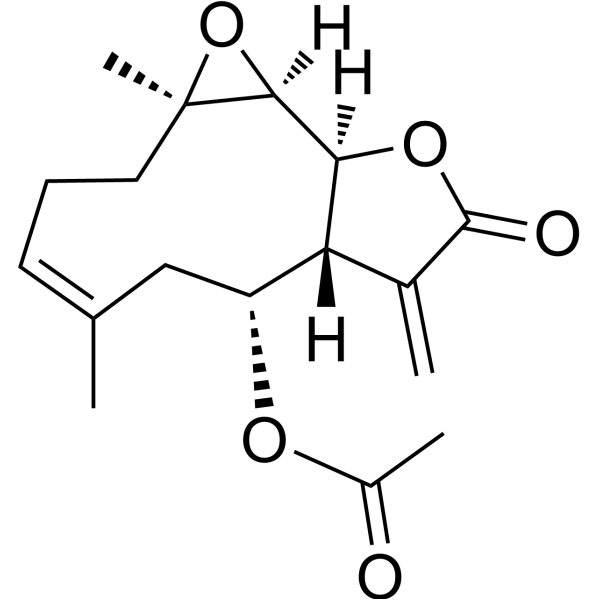 0 ImagesCat. No.: HY-N3378CAS No.: 41059-80-7Lipiferolide is an antiplasmodial agent (IC50: 1.8 μg/mL) that can be isolated from Liriodendron tulipifera. Lipiferolide also inhibits FPTase, and has antitumor activity.
-
Clenpirin
 0 ImagesCat. No.: HY-114614CAS No.: 27050-41-5Clenpirin is a insecticide against cattle ticks Boophilus microplus. Clenpirin exhibits slightly toxicity to rats with LD50 of 3050 mg/kg.
-
8,9-Z-Abamectin B1a
 0 ImagesCat. No.: HY-W1004917CAS No.: 113665-89-78,9-Z-Abamectin B1a is the 8,9-Z-isomer of Abamectin B1a (HY-15308). Avermectin B1a is an antiparasitic agent that paralyzes nematodes.

-
T.cruzi-IN-4
 0 ImagesCat. No.: HY-159097T.cruzi-IN-4 (Compound 21) is an anti-parasitic agent. T.cruzi-IN-4 inhibits the trypomastigote and amastigote form of Trypanosoma cruzi with IC50 of 0.033 μM (120 h), T.cruzi-IN-4 inhibits the promastigote and amastigote form of Leishmania infantum with IC50 of 28.74 and 61.82 μM. T.cruzi-IN-4 inhibits Leishmania amazonensis promastigote form with IC50 of 18.38 μM.
-
Mycoleptone A
 0 ImagesCat. No.: HY-N16426CAS No.: 1532554-02-1Mycoleptone A is an azafluorenone compound. Mycoleptone A exhibits certain anti-leishmanial activity, with an LD50 of 28.5 μM against L. major. Mycoleptone A shows cytotoxicity against human prostate cancer cell line PC3, with an IC50 of 10.0 μM. Mycoleptone A can be used in research on anti-parasitic and anti-tumor aspects.
-
Resorantel (Standard)
 0 ImagesResorantel (Standard) is the analytical standard of Resorantel. This product is intended for research and analytical applications. Resorantel is an anthelmintic. Resorantel is used in the research of paramphistomiasis in cattle and sheep and has also been used for the research of G. aegypticus.
-
6-Methylhydroxyangolensate
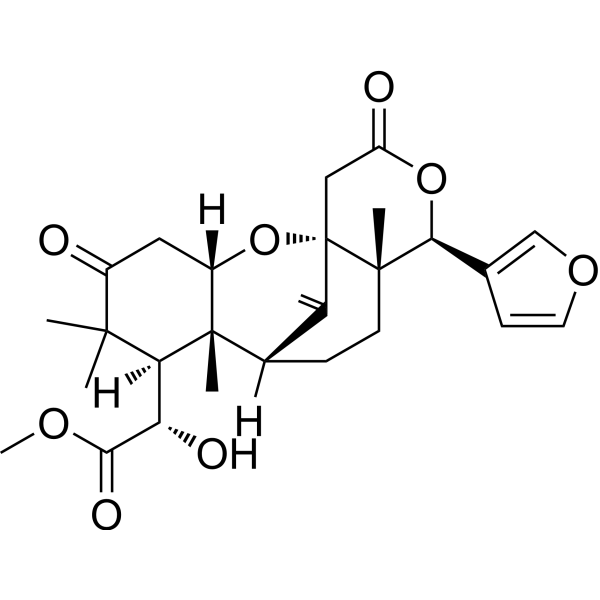 0 ImagesCat. No.: HY-N3283CAS No.: 22255-07-86-Methylhydroxyyangolensate is a limonoid can be extracted from Khaya grandifoliola. 6-Methylhydroxyyangolensate has low antimalarial activity in vitro, with an IC50 of 21.59 μg/ml against P. falciparum (W2/Indochina clone).
-
AN15368
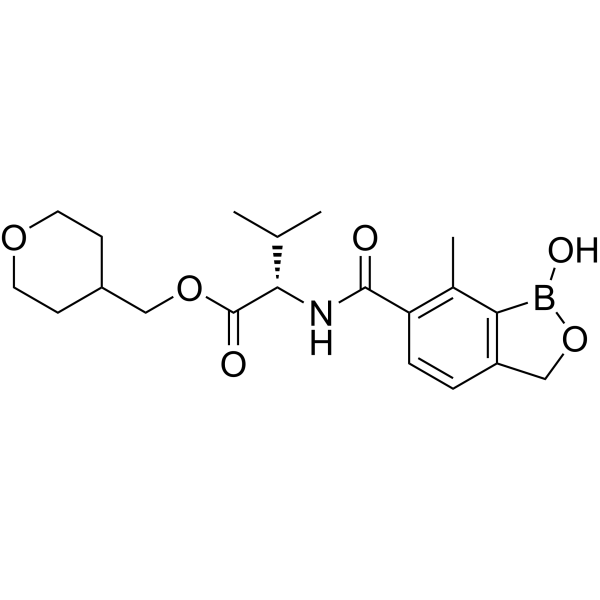 0 ImagesCat. No.: HY-153238CAS No.: 2152662-92-3AN15368 is an orally active trypanocidal agent and a prodrug of AN14667. AN15368 selectively targets CPSF3-mediated mRNA maturation in intracellular amastigotes of Trypanosoma cruzi, reducing the mRNA levels of the parasite. As a prodrug, AN15368 can be cleaved into its active carboxylate form by CBP of Trypanosoma cruzi. AN15368 completely clears long-term naturally acquired Trypanosoma cruzi infections in non-human primates. AN15368 can be used in the research of Chagas disease.
-
CRK12-IN-1
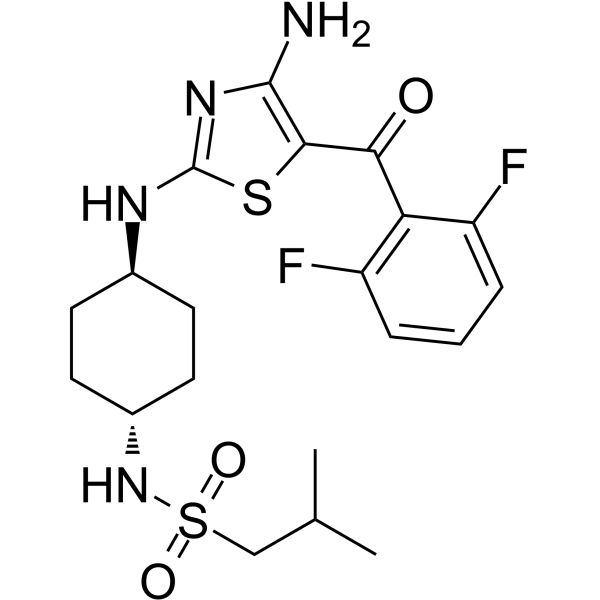 0 ImagesCat. No.: HY-145812CAS No.: 1990479-14-5CRK12-IN-1 is a potent CRK12 inhibitor. CRK12-IN-1 is extremely potent against T.b. brucei and rapidly cytocidal, as well as equally potent against T. congolense and T. vivax (EC50 of 1.3 and 18 nM, respectively).
-
Secnidazole-d3
 0 ImagesCat. No.: HY-B1118S3Synonyms: RP-14539-d3; PM-185184-d3Secnidazole-d3 (RP-14539-d3; PM-185184-d3) is the deuterium labeled Secnidazole (HY-B1118). Secnidazole (RP-14539) is an orally active azole antibiotic and a imidazole mitigator of Serratia marcescens virulence. Secnidazole, as an analog of acylhomoserine lactones, effectively inhibits QS resulting in the attenuation of Pseudomonas aeruginosa pathogenesis. Secnidazole has antimicrobial activity against many anaerobic Gram-negative and Gram-positive bacterial species in vitro. Secnidazole can be used for the research of various diseases, such as amoebiasis and giardiasis, and bacterial vaginitis.
-
HDAC1-IN-4
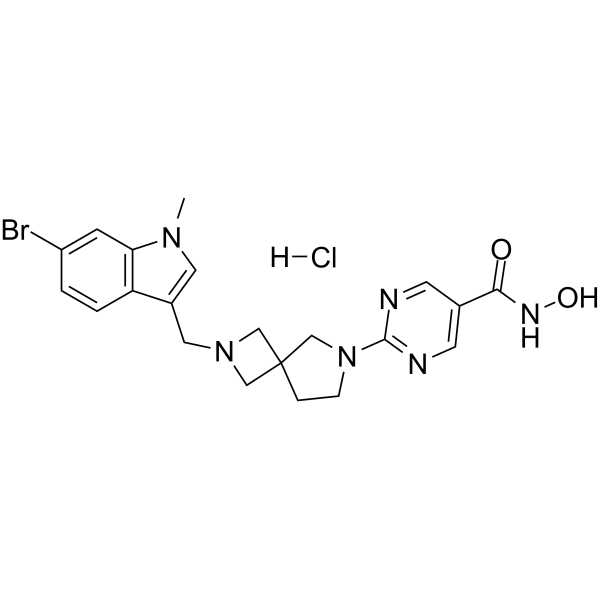 0 ImagesCat. No.: HY-144298CAS No.: 2482998-39-8HDAC1-IN-4 (JX34) is a potent Plasmodium falciparum HDAC1 inhibitor shows antimalarial activity (IC50 < 5 nM) and lower cytotoxicity.
-
3-Deoxyaphidicolin
 0 ImagesCat. No.: HY-125698CAS No.: 85483-00-73-Deoxyaphidicolin exhibits phytotoxic efficacy, that inhibits root growth of lettuce seedlings. 3-Deoxyaphidicolin also exhibits leishmanicidal activity against Leishmania major and Leishmania braziliensis.
-
ELQ-598
 0 ImagesCat. No.: HY-163483CAS No.: 3023709-99-8ELQ-598, as a prodrug, is converted into the active drug ELQ-596 upon oral administration. ELQ-598 demonstrates potent parasitic growth inhibition capabilities (IC50= 37 nM). ELQ-598 also shows low toxicity towards human cells (IC50= 19 μM). ELQ-598 can be used for research into babesiosis.
-
Isocudraniaxanthone A
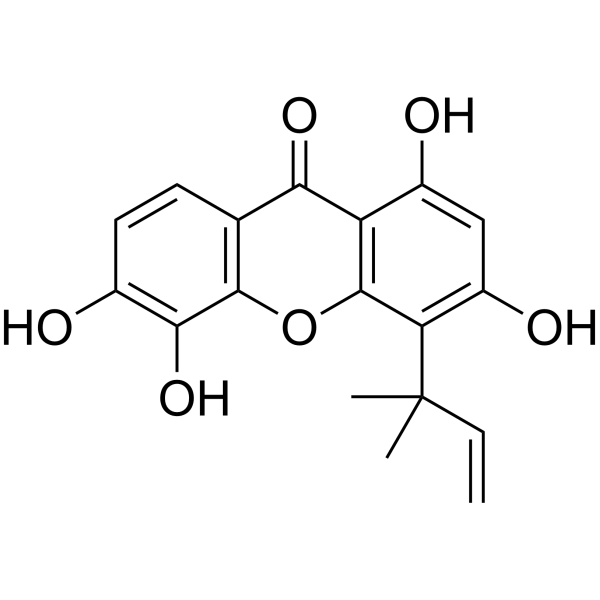 0 ImagesCat. No.: HY-N8455CAS No.: 197447-26-0Synonyms: Assiguxanthone AIsocudraniaxanthone A is a xanthone that can be isolated from Garcinia vieillardii. Isocudraniaxanthone A has antimalarial activity against chloroquino-resistant strains of Plasmodium falciparum with an IC50 of 2.3 μg/mL.
-
Arsthinenol
 0 ImagesArsthinenol (Arsthinol; Balarsen) is an orally active small organic arsenic molecule. Arsthinenol exhibits anti-amoebic activity by eliminating cysts and trophozoites of Entamoeba histolytica in feces and promoting the healing of amoebic rectal ulcers. Arsthinenol forms the hydroxypropyl-β-cyclodextrin inclusion complex STB-HPβCD, which has an IC50 of 31.6 μM against U87 MG cells and possesses anti-tumor activity. Arsthinenol can be used in the research of intestinal amoebiasis and glioblastoma.
-
Antileishmanial agent-11
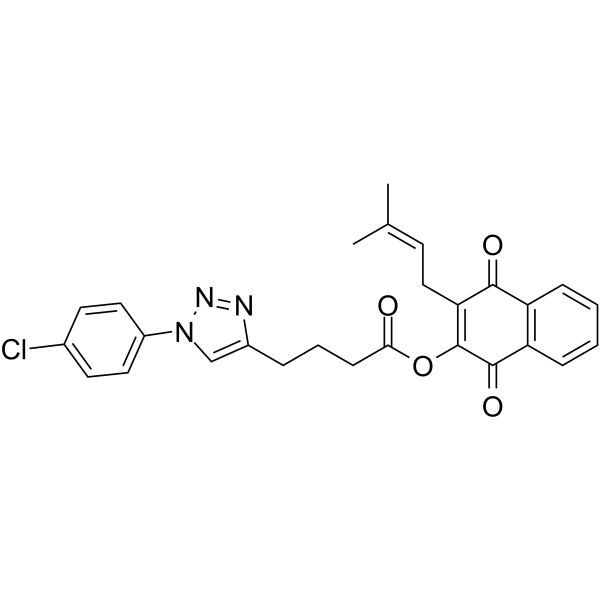 0 ImagesCat. No.: HY-147856CAS No.: 2253635-71-9Antileishmanial agent-11 (compound 4d) is a potent anti-leishmanial agent. Antileishmanial agent-11 shows antiprotozoal activity against Leishmania brazilensis, Leishmania infantum, and T. cruzi, with IC50 values of 28.3, 24.8 and 13.0 μM, respectively.
-
Avermectin A1a
 0 ImagesCat. No.: HY-W783593CAS No.: 65195-51-9Avermectin A1a is a potent and broad-spectrum antiparasitic agent. Avermectin A1a targets nematodes and arthropods by binding to their glutamate-gated chloride channels to block nerve signal transmission and induce paralysis. Avermectin A1a can be used for the study of parasitic infection.
-
Hydroxychloroquine-d4 sulfate
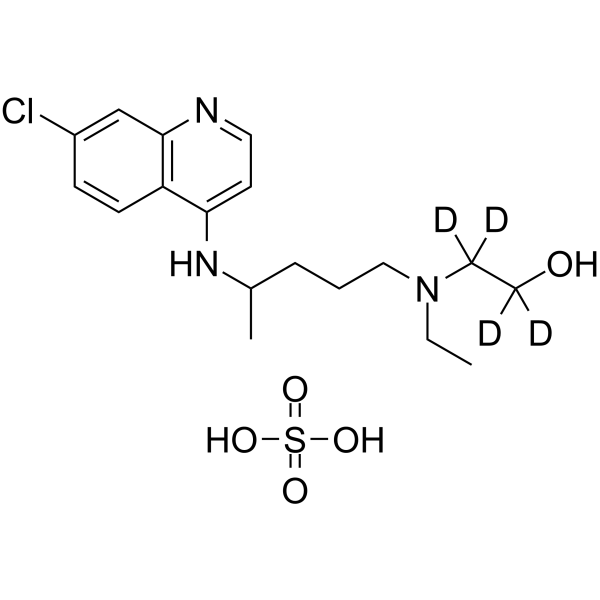 0 ImagesCat. No.: HY-B1370SCAS No.: 1854126-45-6Synonyms: HCQ-d4 sulfateHydroxychloroquine-d4 (sulfate) is the deuterium labeled Hydroxychloroquine sulfate. Hydroxychloroquine sulfate (HCQ sulfate) is a synthetic antimalarial agent which can also inhibit Toll-like receptor 7/9 (TLR7/9) signaling. Hydroxychloroquine sulfate is efficiently inhibits SARS-CoV-2 infection in vitro.



